

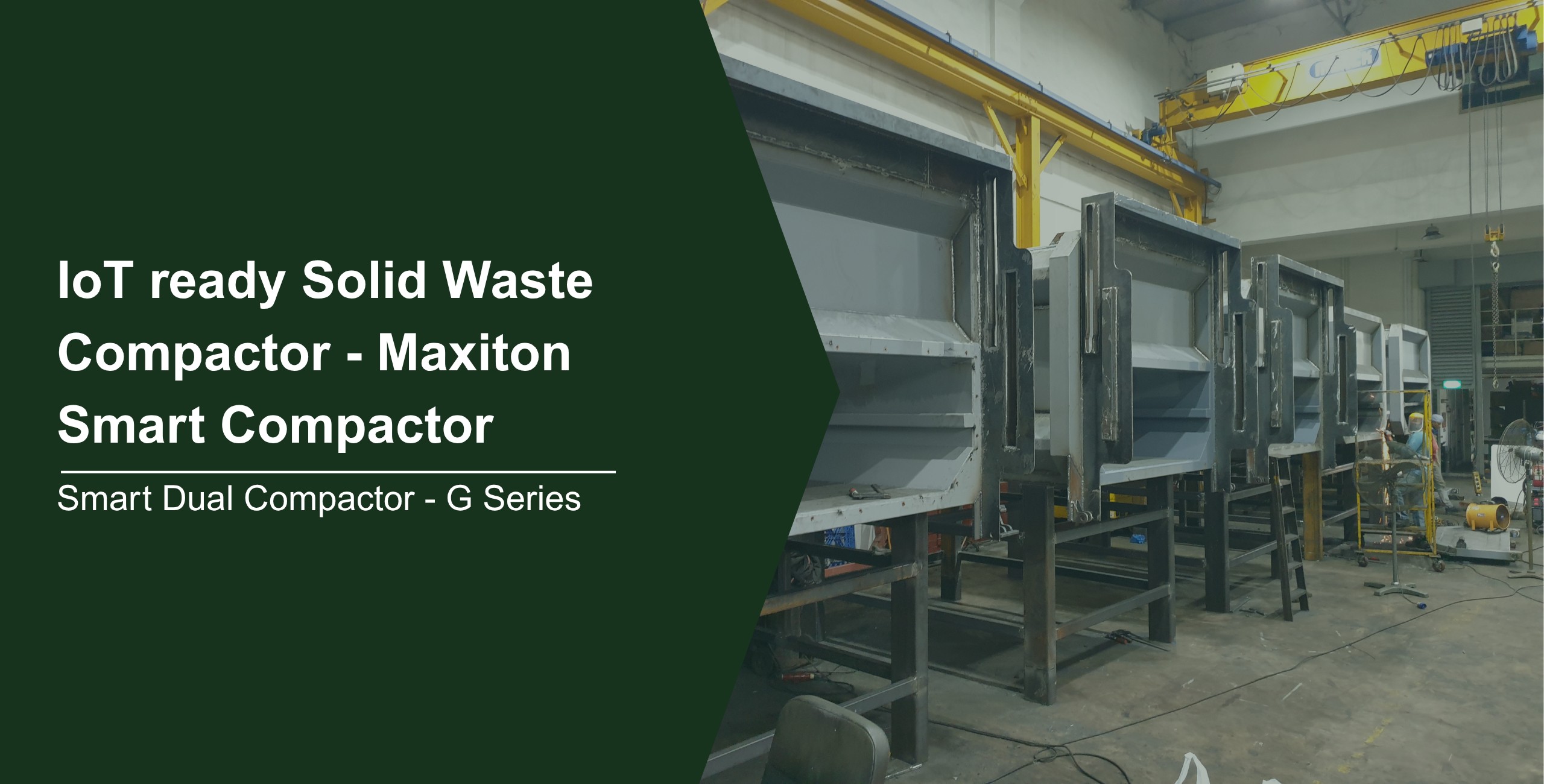
Smart Dual Compactor – G Series
Smart waste compactors engineered by professionals
Smart Maxiton G-Series compactor is a compactor specially designed for small waste collection points.
By combining the advantages of dust screw and compactor, Maxiton G-Series makes it possible to store and discharge waste with a confined space, increasing the efficiency of waste collection.
Maxiton G-Series is also enhanced with smart features such as sensors, IoT, and Big Data capabilities to make it easy for management and operators to collect vital data from the compactor from anywhere they are!
Maxiton G-Series In Action
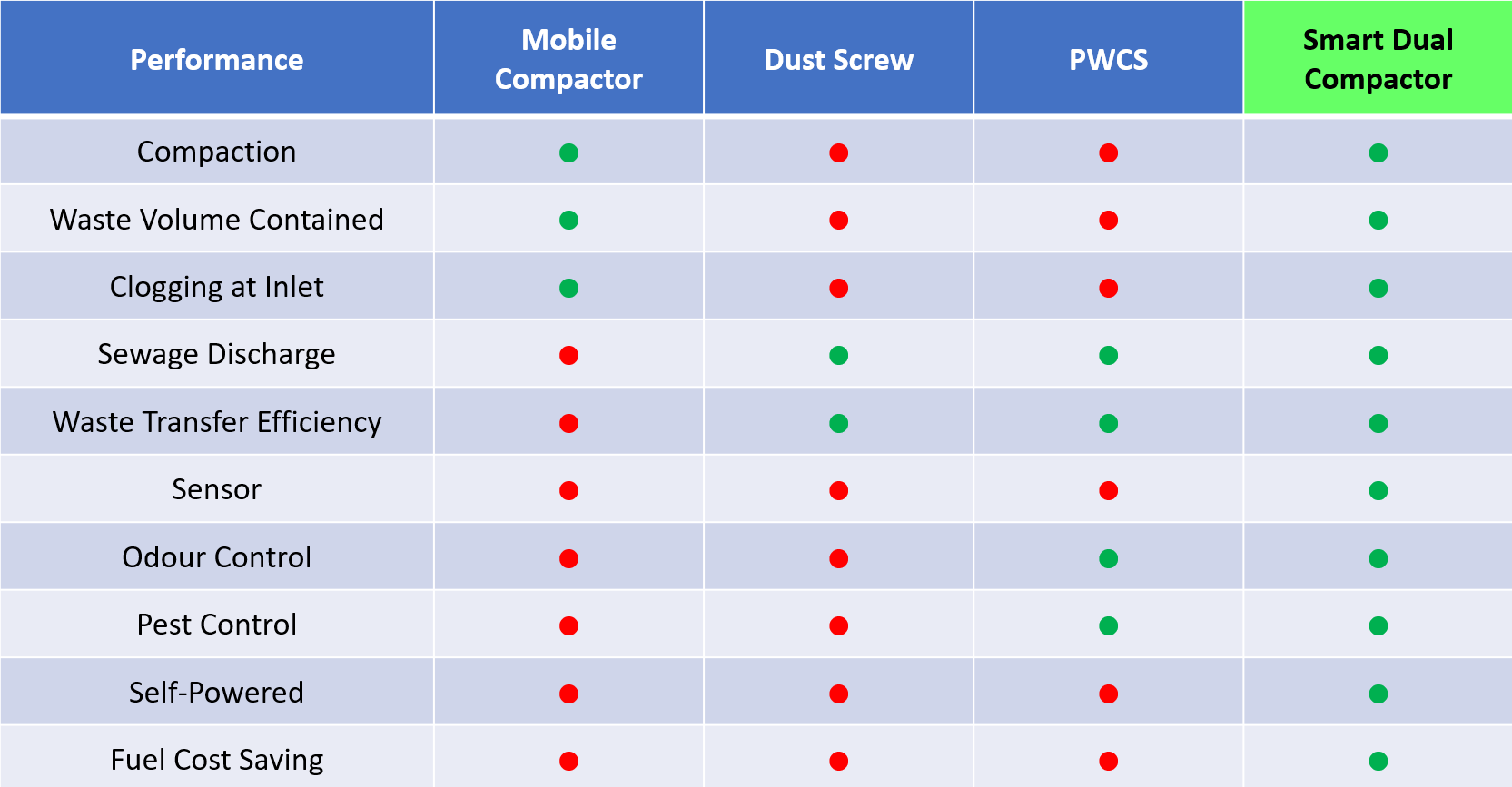
Comparison of Conventional Solid Waste Equipment and Smart Dual Compactor
FAQ
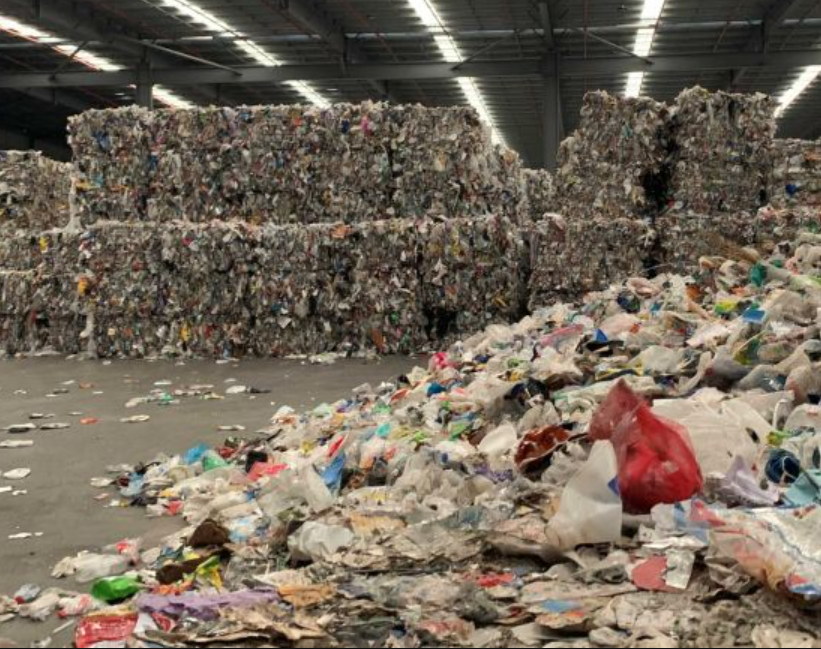
Compression refers to the process of pushing waste into less space, mainly through the weight of the machine and the pressure-typically measured in pounds per square inch (psi)-exerted by the compactor wheels (drums).
Compaction reduces waste volume allows higher volume of waste to be contained within the compactor making it possible to reduce the annual number of truck hauls. Reduced annual number of truck hauls translates into:
- Cost savings
- Reduced labour costs
- Reduced waste storage problems
- What is the average volume of waste generated?
- What is the largest item in the waste collected?
- What is the type of waste being processed?
- Where will the compactor be located?
- Is there a suitable power source nearby?
- Is the compactor capable of handling your existing bins?
- How will the compactor be installed?
- Shed precipitation
- Compact waste for better waste storage
- Able to contain larger variation of waste
- Requires less landfill volume and footprint
- Shed precipitation, reducing the level of contaminants in the leachate
- Oxygen is essential to combustion. Compaction pushes out air eliminating the possibility of air coming in contact with combustible waste at the surface of the landfill, reducing risks of fire.
- The more compaction, the less infiltration of rain water inside the cell. Water remains close to the surface, and a higher percent evaporates instead of percolating through the landfill. This reduces the amount of leachate generated, reduces ground pollution risks and lowers leachate treatment costs.
- Good compaction promotes mixing and blending of materials, creating a more even surface at the landfill
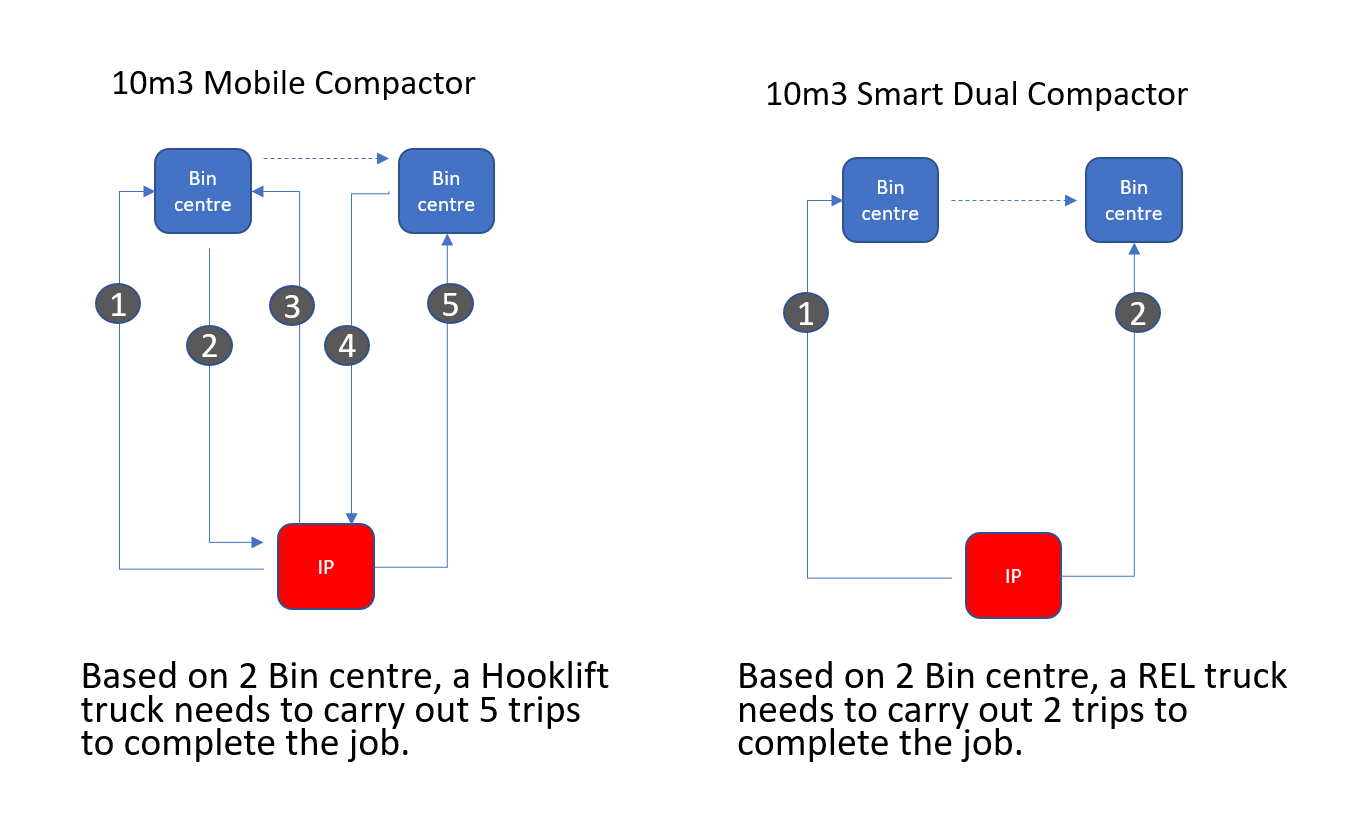
- Stationary compactor – Reduces 5 collection trips to 2 collection trips
2. Internal flushing system – Do not need haulage or workers to clean
3. Automated smoke detection & flushing system – Flushing system is triggered to put out non oil-based fire, reducing damage done to structure and building
4. Higher compaction ratio & storage capability – Reduce collection trips and costs
5. IoT data collection system & operator notification function – On-demand refuse collection to reduce wasted collection trips and costs
6. IoT dashboard – Get data like peak period, discharge schedule etc for business analytics
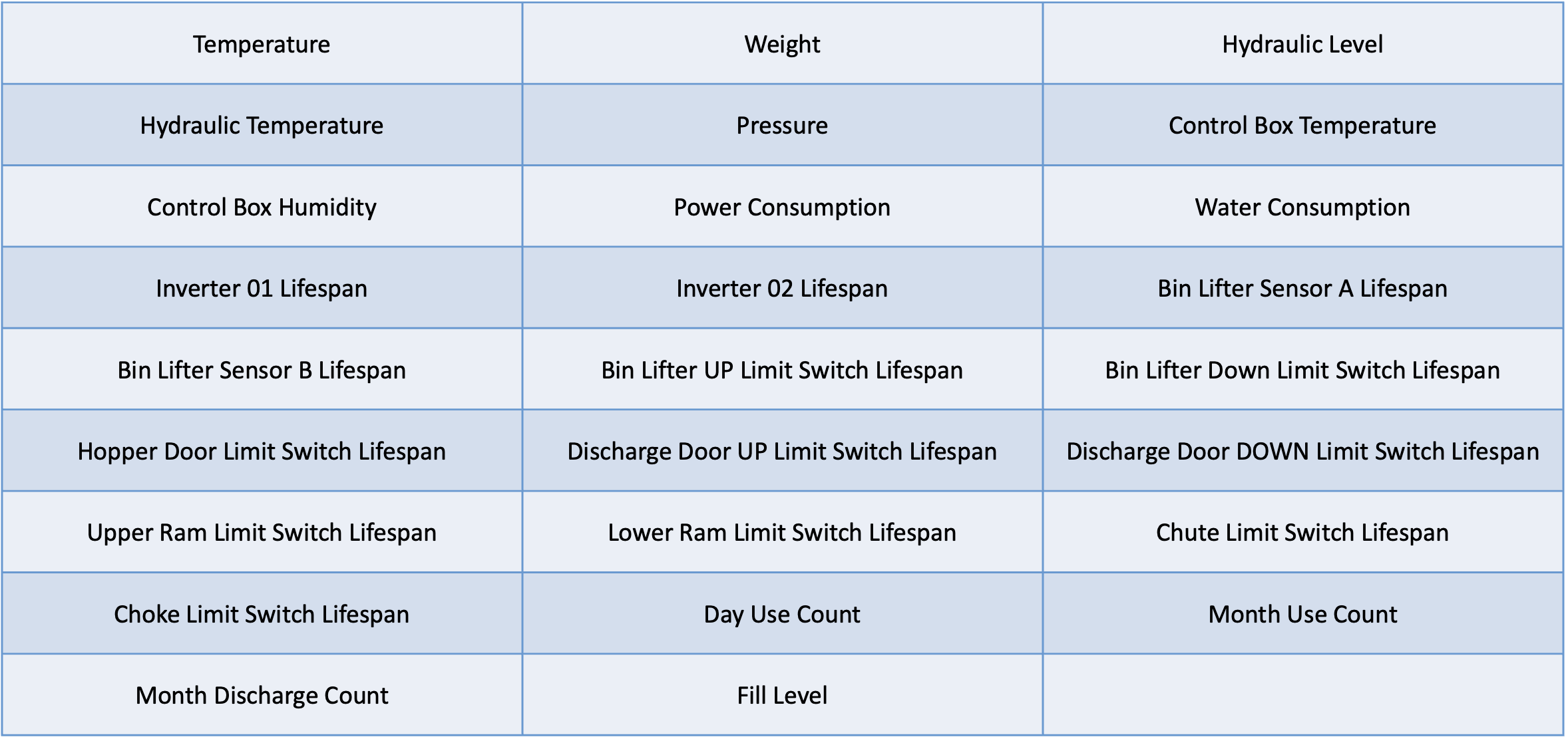
Remote monitoring works through the implementation of a smart sensor system in a network of waste management equipment.
Operators/ Management can have a full overview of the health of their waste management network with a real-time dashboard and be notified if there are any warnings/ breakdowns.
To reduce the costs, the system can also notify operators of predictive maintenance to ensure timely replacement of parts. This would reduce breakdown opportunity costs.
- Alert Systems

- Smart Monitoring Systems


Up to 50% Grant for Smart Solid Waste Compactor
Environmental Services Productivity Solutions Grant (ES PSG) by NEA
Offering up to 50% in funding support with a cap of S$200,000 per company, the Environmental Services Productivity Solutions Grant (ES PSG) is intended to support the ES industry in Singapore.