Food Waste Digesters for Singapore Buildings: How On-Site Processing Reduces Collection Costs
Singapore generates over 800,000 tonnes of food waste annually. For buildings with food courts, restaurants, or large residential populations, food waste is a daily operational challenge — heavy, smelly, and expensive to collect frequently.
On-site food waste digesters offer a practical alternative: process the waste where it’s generated, reduce volume by up to 90%, and cut collection frequency dramatically.
What Is a Food Waste Digester?
A food waste digester (also called a food waste decomposer or bio-digester) is a machine that breaks down organic food waste using aerobic microbial processes. Unlike composting — which takes weeks — modern digesters can process food waste in 24 hours or less.
The output is either:
- Liquid effluent — discharged safely into the building’s greywater system
- Dry biomass — reduced-volume solid that can be used as soil conditioner or disposed of with general waste at a fraction of the original volume
How It Works
The digestion process in a typical commercial food waste digester:
- Loading — food waste is deposited into the machine (manually or via automated feed)
- Shredding — built-in blades break down large pieces for faster decomposition
- Heating — the chamber maintains 60-70°C to accelerate microbial activity
- Aeration — forced air circulation provides oxygen for aerobic bacteria
- Decomposition — microorganisms break down organic matter over 12-24 hours
- Output — liquid is drained; remaining solid is 10-20% of original volume
Who Benefits Most in Singapore?
Food waste digesters make the most economic sense for:
- Condominiums with 500+ units — large residential populations generate significant daily food waste
- Commercial buildings with F&B tenants — food courts, restaurants, and cafeterias produce concentrated organic waste
- Hotels and resorts — buffet operations generate predictable, high-volume food waste
- Hospitals and institutions — cafeterias serving hundreds of meals daily
- Industrial canteens — factory and warehouse complexes with on-site dining
Cost-Benefit Analysis
For a typical Singapore commercial building generating 200kg of food waste daily:
- Without digester: Daily collection required, ~$800-1,200/month for food waste disposal alone
- With digester: 90% volume reduction means collection drops to weekly or bi-weekly, saving 60-70% on disposal costs
- Payback period: Typically 18-30 months depending on waste volume and current disposal costs
Additional savings come from:
- Reduced bin centre odour complaints (fewer management hours spent on resident issues)
- Lower pest control costs
- Potential NEA incentives for waste reduction initiatives
Smart Features: IoT-Connected Digesters
Modern food digesters can be equipped with IoT connectivity for remote monitoring:
- Processing status — know when a cycle is complete and the machine is ready for the next load
- Temperature monitoring — ensure the digestion chamber maintains optimal temperature
- Error alerts — immediate notification if the machine encounters a fault
- Usage tracking — log how much food waste is processed daily/monthly for sustainability reporting
- Energy consumption — monitor power usage and optimise operating schedules
Installation Considerations
Before installing a food waste digester in your Singapore building, consider:
- Space requirements — machines range from compact (1m²) to industrial (10m²+) depending on capacity
- Power supply — typically requires 3-phase power for commercial units
- Water connection — needed for the decomposition process and cleaning
- Drainage — liquid output needs connection to greywater or sewer system
- Ventilation — adequate airflow to manage heat and moisture from the process
- Loading access — easy path from food waste source to machine for daily operations
Singapore’s Push Toward Zero Food Waste
Under the Resource Sustainability Act, Singapore is progressively mandating food waste segregation and treatment for large commercial premises. Buildings that adopt on-site processing now are ahead of regulatory requirements — and already benefiting from reduced disposal costs.
NEA’s Say YES to Waste Less campaign and various grant schemes (including the 3R Fund) may provide co-funding for food waste reduction equipment in qualifying premises.
Choosing the Right Capacity
Food digester sizing depends on daily waste volume:
- 50-100kg/day — small commercial (single restaurant, small food court)
- 100-300kg/day — medium commercial (multiple F&B tenants, large condo)
- 300-1000kg/day — large commercial (hotel, hospital, major food court)
- 1000kg+/day — industrial (central kitchen, food manufacturing)
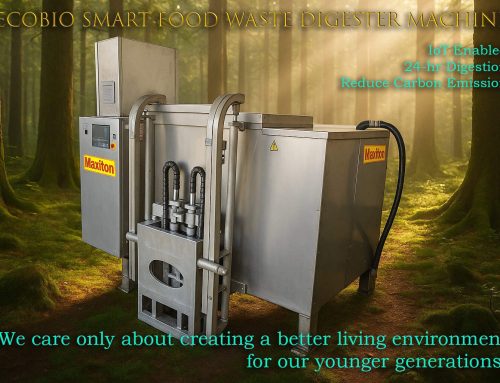
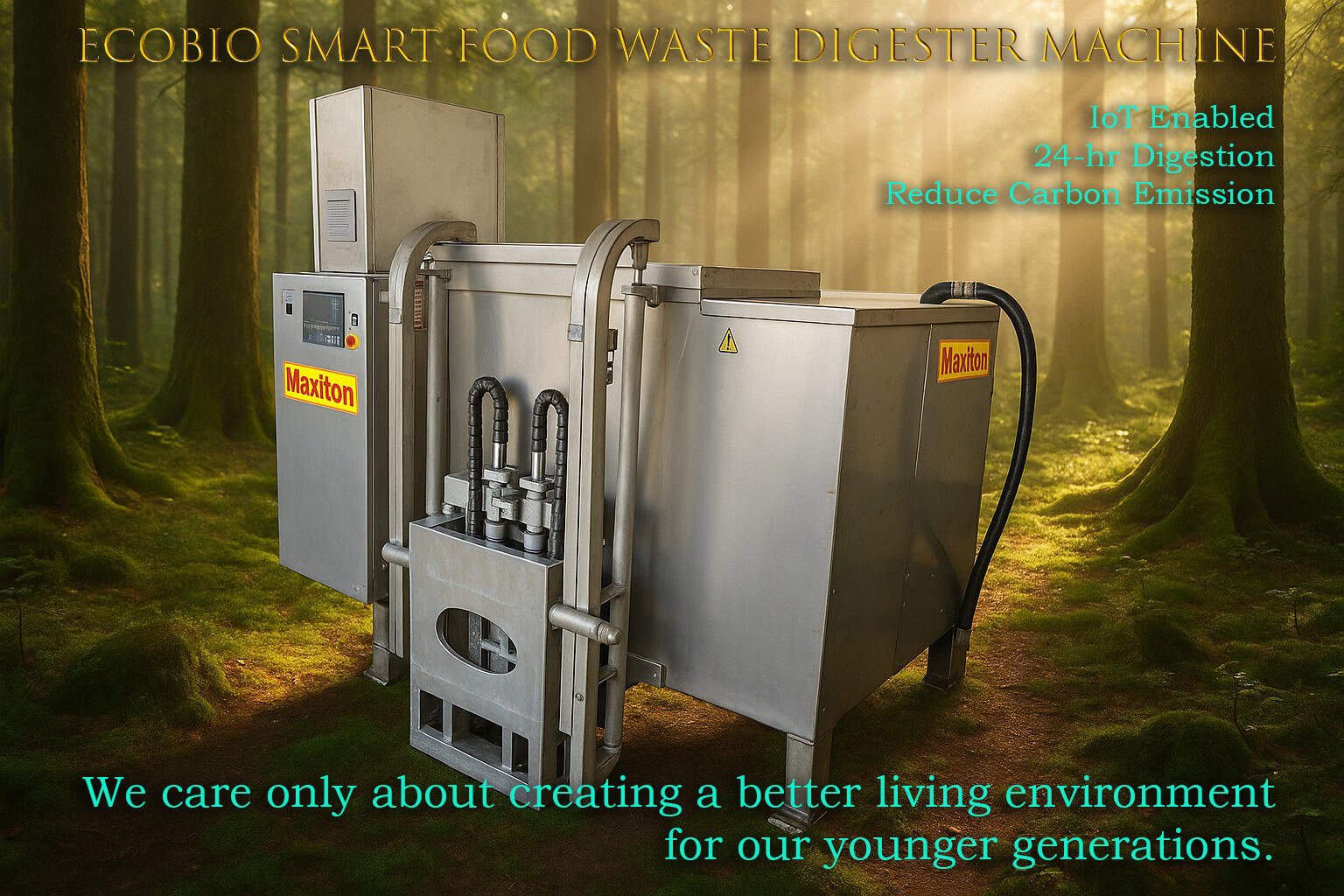
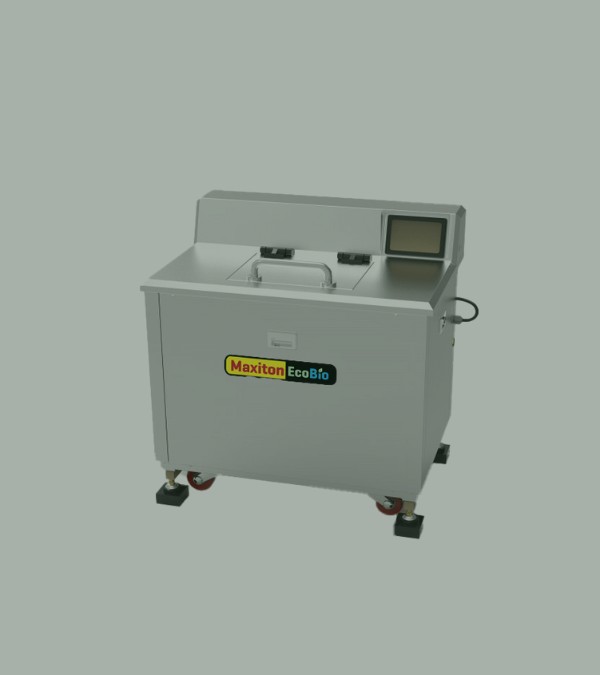
Maxiton’s Smart EcoBio Food Digester is designed for commercial and institutional applications, with stainless steel construction for corrosion resistance and IoT connectivity for remote monitoring.
Considering on-site food waste processing for your building? Maxiton Engineering Asia provides food waste solutions tailored to Singapore’s climate and regulations. Request a free consultation to assess your building’s requirements.