Refuse Chute Compactor Systems in Singapore HDB and Condominiums: What Facility Managers Need to Know
Every high-rise residential building in Singapore has a refuse chute system. But not every building handles the waste that lands at the bottom efficiently. The difference between a well-managed bin centre and a problematic one often comes down to the compaction system installed at the chute discharge point.
How Refuse Chute Compactors Work
In a typical Singapore high-rise, residents dispose of bagged waste through chute hoppers on each floor. Gravity carries the waste down to the ground-floor bin centre, where it accumulates in a collection chamber.
Without a compactor, this waste sits loose — taking up far more volume than necessary and requiring frequent collection. A refuse chute compactor solves this by automatically compressing the waste as it arrives, reducing volume by up to 5:1.
The compaction cycle is typically triggered by:
- Fill level sensors — when waste reaches a certain height in the chamber
- Timer-based cycles — compacting at regular intervals regardless of fill level
- Weight threshold — when the load cell detects a minimum weight of loose waste
Single Ram vs Dual Ram Compactors
The two main configurations for refuse chute compactors are:
Single Ram Compactor
- One hydraulic ram pushes waste horizontally into a detachable container
- Simpler mechanism, lower maintenance
- Suitable for buildings with moderate waste volume (up to ~200 units)
- Container is swapped out when full and taken for disposal
Dual Ram Compactor
- Two-stage compaction: first ram compresses vertically, second ram pushes into container
- Higher compaction ratio — handles larger waste volumes
- Ideal for large condominiums (300+ units) or commercial buildings
- Reduces collection frequency further due to denser compaction
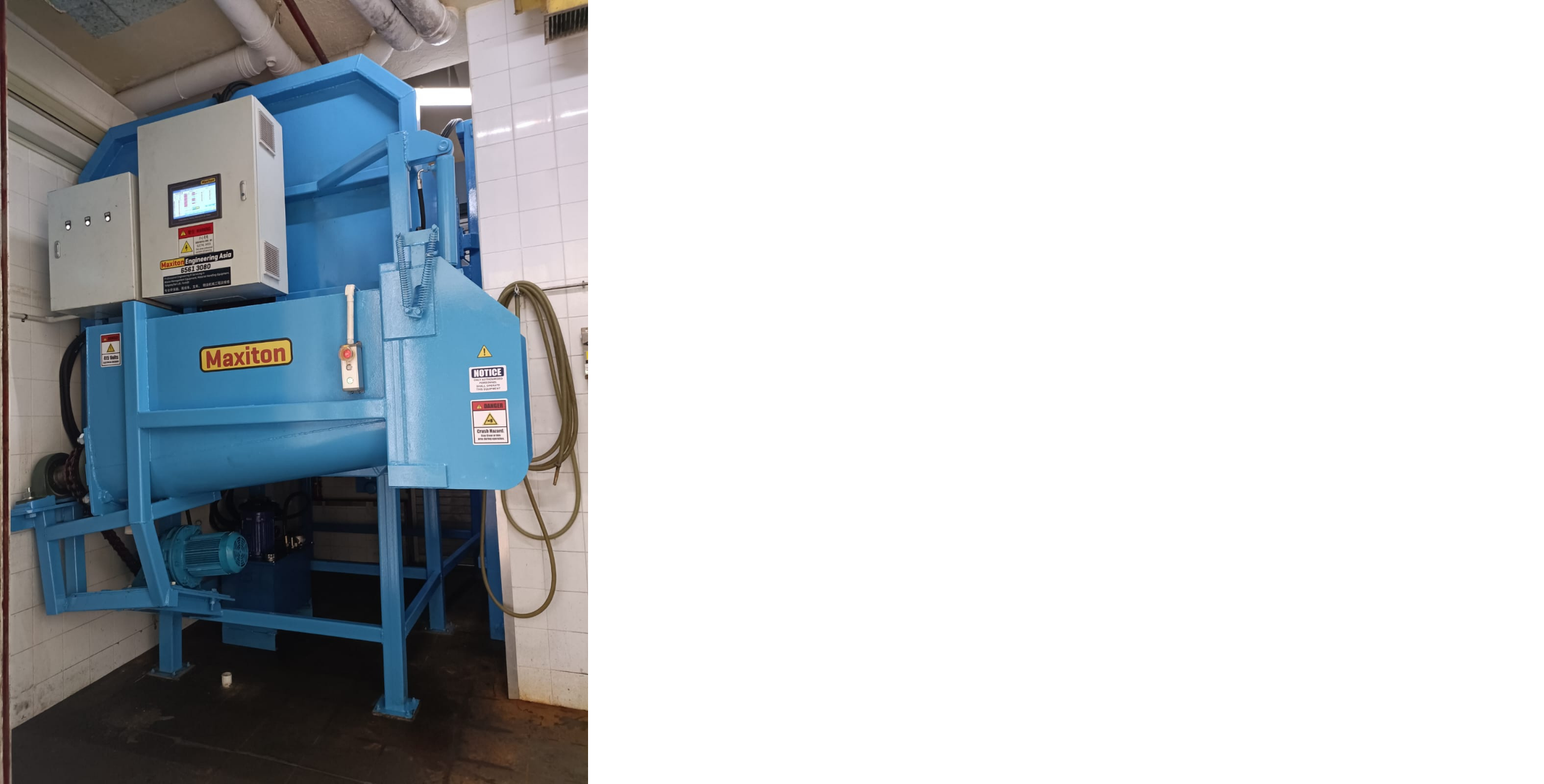
Maxiton offers both single ram and dual ram configurations, as well as the newer G Series dual compactor with enhanced IoT capabilities.
Common Problems in Singapore Bin Centres
Facility managers across Singapore deal with recurring issues that smart compactor systems can address:
- Odour complaints — loose waste decomposes faster in Singapore’s heat. Compacted waste has less exposed surface area, reducing smell
- Pest attraction — rats and cockroaches thrive in loose waste. Sealed compaction chambers limit access
- Overflow during peak periods — without monitoring, bin centres overflow before the next scheduled collection
- Chute blockages — sensors can detect choke conditions and alert maintenance before a full blockage develops
- Unreported breakdowns — a compactor can sit broken for days if no one checks. IoT alerts notify immediately
What IoT Adds to Refuse Chute Systems
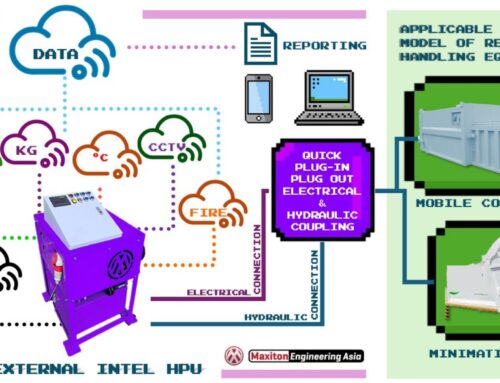
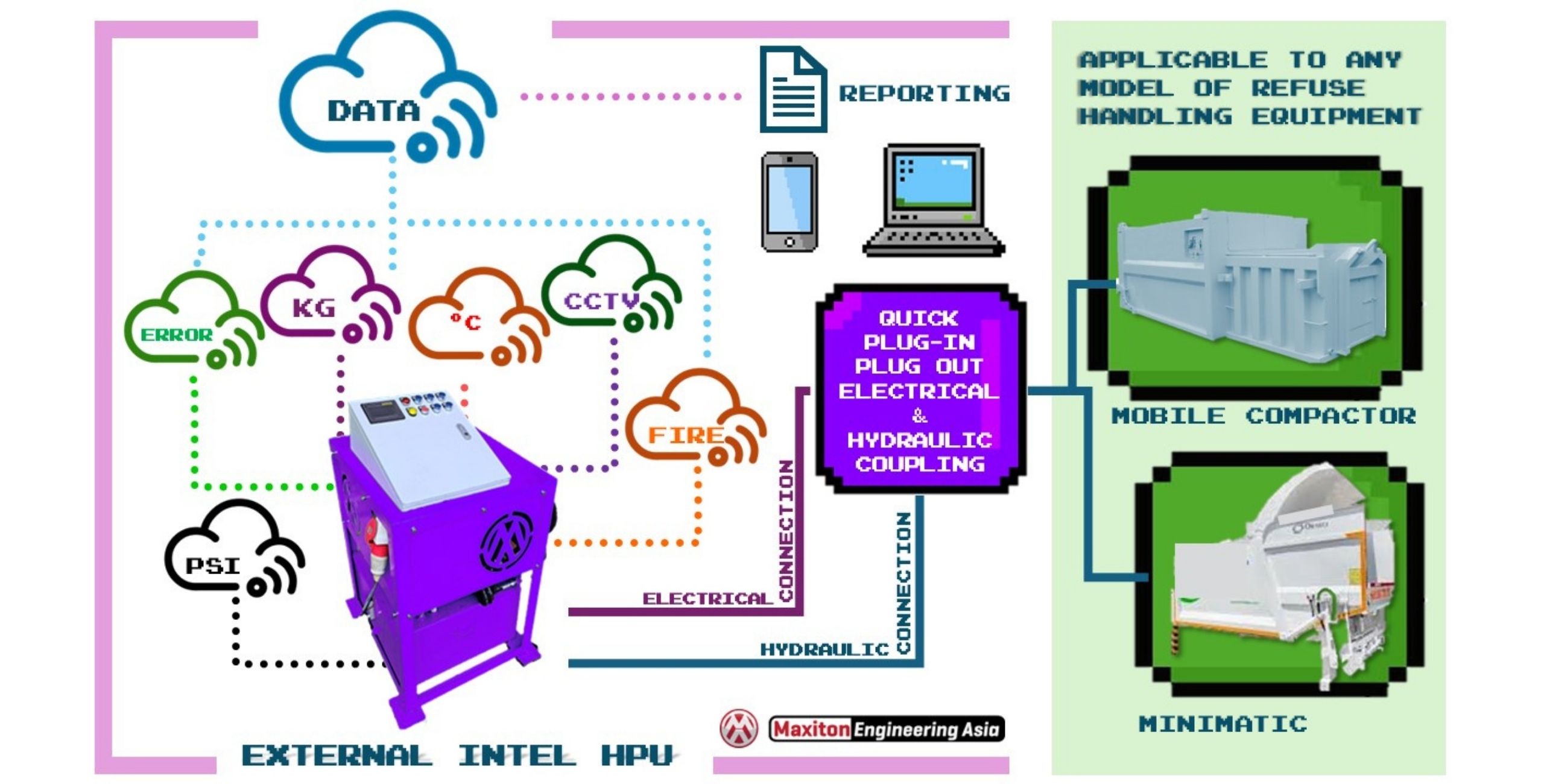
Traditional compactors are mechanical-only — they compact waste but provide no visibility into operations. Adding IoT integration transforms them into monitored assets:
- Remote fill level tracking — know exactly when each bin centre needs collection
- Automated alerts — receive notifications at 80% and 90% fill, or on any system fault
- Usage analytics — track compaction cycles per day/month to understand waste generation patterns
- Predictive maintenance — monitor hydraulic health, motor cycles, and sensor lifespan to service before failure
- Multi-site dashboard — manage compactors across all your buildings from one portal
Choosing the Right System for Your Building
The right compactor depends on your building’s specific needs:
- Building size: Under 200 units → single ram. Over 300 units → dual ram or G Series
- Waste type: Residential general waste vs commercial/F&B waste have different compaction requirements
- Space constraints: Bin centre dimensions determine which compactor models fit
- Budget: Consider total cost of ownership including maintenance, not just purchase price
- Future-proofing: Choose a system with IoT capability even if you don’t activate it immediately
Singapore Regulations and Standards
All refuse chute systems in Singapore must comply with SS 557 (Code of Practice for the Design and Installation of Refuse Chutes). Key requirements include:
- Minimum chute diameter of 450mm for residential buildings
- Fire-rated hopper doors at each floor
- Adequate ventilation in the bin centre
- Access for maintenance and collection vehicles
When retrofitting or upgrading a compactor system, ensure the new equipment meets current BCA and NEA requirements. Maxiton’s engineering consultancy service can assess your existing setup and recommend compliant upgrades.
Need help selecting the right refuse chute compactor for your building? Maxiton Engineering Asia provides equipment supply, retrofit services, and ongoing maintenance for Singapore residential and commercial properties. Get a free quotation.