

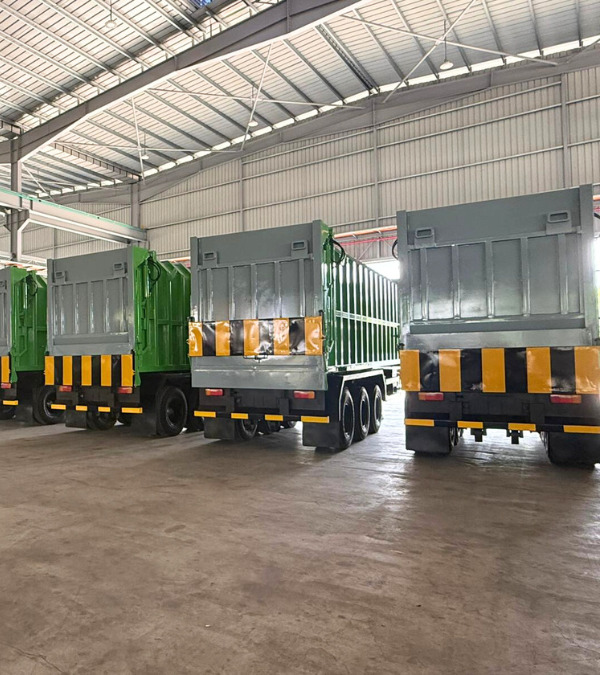
Most commercial buildings in Singapore rely on individual waste compactors at ground level or basement collection points. But as properties scale up—mixed-use developments, large industrial estates, logistics hubs, integrated resorts—the limitations of standalone compactors become apparent. That’s when facility managers start looking at waste transfer stations.
What Is a Waste Transfer Station?
A waste transfer station is an intermediate processing facility where waste from multiple sources is consolidated, sorted, and compacted before being loaded into larger transport vehicles. Unlike a simple compactor that handles one waste stream from one building, a transfer station can:
- Aggregate waste from multiple buildings or zones within a property
- Sort mixed waste streams (general waste, recyclables, food waste, bulky items)
- Compact waste into high-density loads optimized for long-haul transport
- Temporarily store waste during off-peak collection hours
- Coordinate logistics for multiple waste haulers and recycling partners
Think of it as a “mini waste management hub” within your property—especially relevant for large-scale developments where waste generation exceeds what a single compactor or collection point can handle efficiently.
Signs Your Property Needs a Transfer Station
1. Multiple Buildings with Separate Collection Points
If your development includes multiple towers, blocks, or zones—each with its own compactor—you’re likely facing:
- Waste haulers making multiple stops within the same property (higher collection fees)
- Inconsistent fill rates across compactors (some overflow while others are half-empty)
- No central oversight of total waste generation
A transfer station consolidates waste from all collection points into one optimized loading area, reducing truck movements and improving logistics coordination.
2. High Waste Volume with Mixed Streams
Properties that generate more than 10-15 tons of waste daily—common in:
- Integrated resorts and convention centers
- Large industrial parks with manufacturing + office + F&B tenants
- Logistics and distribution hubs
- Mixed-use developments with retail malls, hotels, and residential towers
…often need dedicated sorting and staging areas to handle general waste, recyclables, food waste, and bulky items separately. A transfer station provides the space and equipment to manage this complexity.
3. Limited Direct Access for Large Collection Vehicles
If your property’s loading bays or basement access ramps can’t accommodate 20-ton or 40-ton compactor trucks, you face a choice:
- Use smaller collection vehicles (higher per-ton hauling costs)
- Install a transfer station with on-site compaction into large roll-off containers that are picked up less frequently
Transfer stations with stationary compactors and detachable containers allow you to compact waste on-site, then have large trucks swap out full containers during scheduled pickups—without needing daily access for collection vehicles.
4. Regulatory or Sustainability Reporting Requirements
Singapore’s push toward zero waste and mandatory waste reporting for large commercial generators means properties need better data on waste generation, diversion rates, and recycling performance. Transfer stations equipped with:
- Weighing scales for incoming waste streams
- IoT sensors and data logging systems
- Automated sorting or manual sorting bays
…provide the infrastructure to track, report, and optimize waste management performance—essential for BCA Green Mark, ISO 14001, or corporate ESG reporting.
Learn more about IoT tracking: Maxiton IoT Waste Monitoring
Key Components of a Commercial Transfer Station
Waste Receiving and Sorting Area
Designated bays where waste from different sources is dropped off and sorted by type. Modern facilities use color-coded zones, clear signage, and sometimes automated conveyors to separate recyclables from general waste.
Compaction Equipment
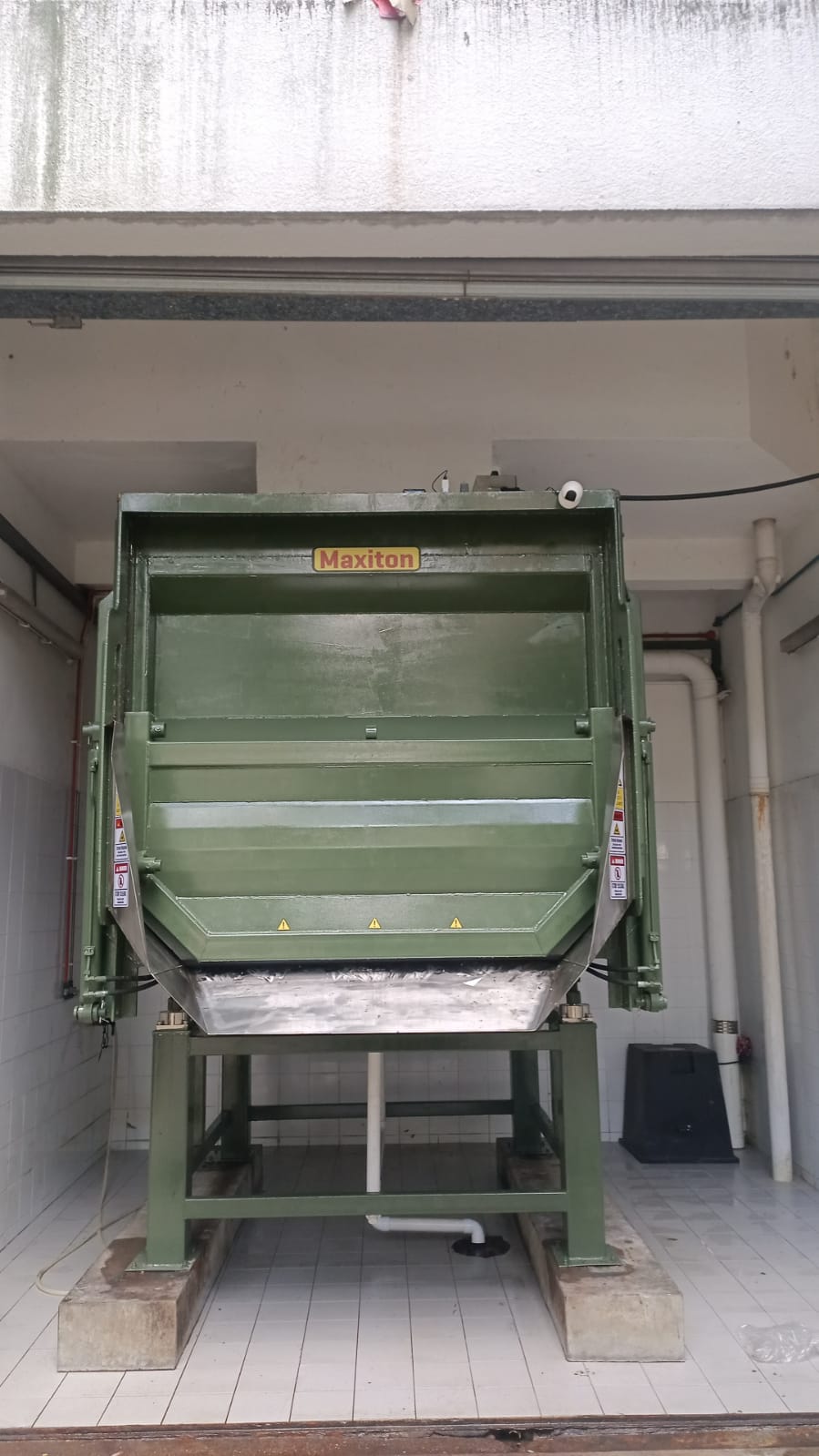
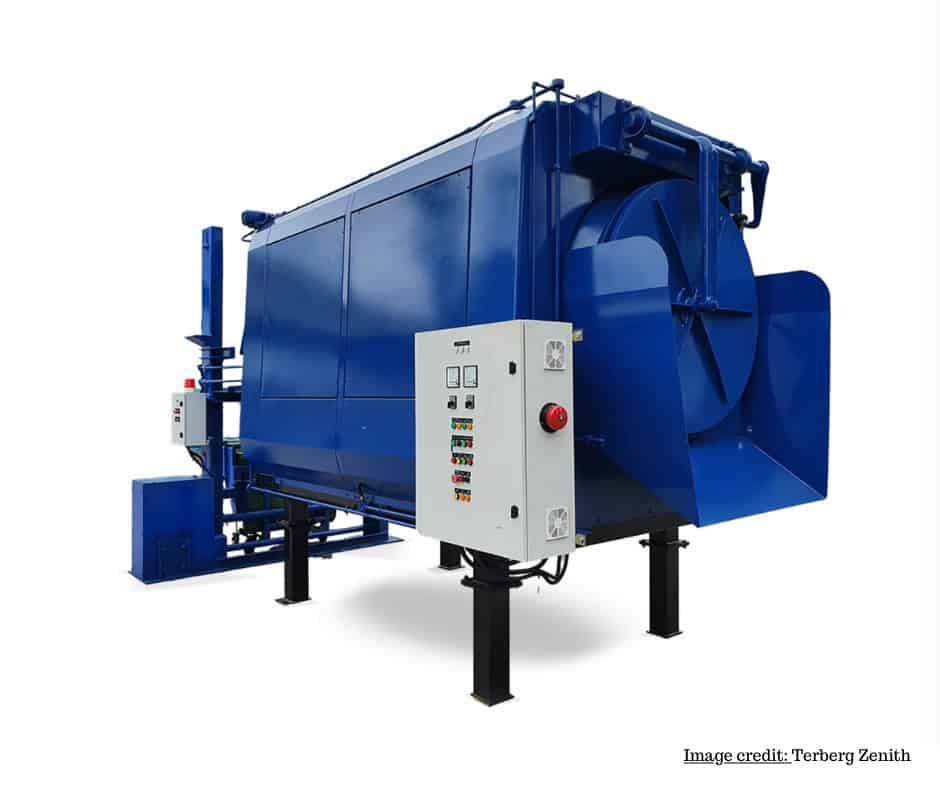
Typically stationary compactors that feed into large steel containers (10-40 cubic meters). These containers are detachable and can be swapped out by hook-lift or roll-off trucks without stopping compaction operations.
Temporary Storage (Staging Area)
Climate-controlled or well-ventilated space to hold waste during off-peak hours. This is especially important for food waste or when collection schedules don’t align with peak waste generation times (e.g., after-hours for F&B operations).
Odor Control and Ventilation
Industrial exhaust fans, misting systems, or biofilters to manage odor and maintain air quality. Critical for transfer stations in mixed-use developments where waste handling is near residential or public areas.
Safety and Fire Suppression
Fire detection, sprinkler systems, emergency shutoffs, and clear egress paths. Transfer stations handle larger volumes and have more mechanical equipment than standard compactor rooms, so safety infrastructure must scale accordingly.
Data and Monitoring Systems
Weighbridges or integrated scales to track inbound and outbound waste tonnage, plus IoT sensors for real-time monitoring of container fill levels, equipment status, and environmental conditions.
Design Considerations for Singapore Properties
Space Requirements
A basic transfer station for a property generating 10-15 tons/day needs approximately:
- 150-250 m² of covered floor space for receiving, sorting, and compaction
- Additional 50-100 m² for container staging and truck maneuvering
- 3.5-4.5 m ceiling height to accommodate compactor hoppers and overhead conveyors
Larger facilities (20+ tons/day) may require 400-600 m² or more, depending on the number of waste streams and level of automation.
Location and Access
Ideally situated at basement or ground level with:
- Direct vehicle access for waste collection trucks (minimum 4m wide ramp, 4.5m clearance)
- Separate entry/exit paths to avoid congestion
- Sufficient distance from residential units, air intake vents, and public areas (odor/noise buffer)
For properties without ideal ground-level access, elevated transfer stations with hydraulic lifts or conveyor systems can work, though they add complexity and cost.
Drainage and Wash-Down Systems
Transfer stations generate leachate (liquid runoff from compacted waste) and require regular cleaning. Design must include:
- Sealed floors with drainage to grease traps or pre-treatment systems (not directly to storm drains)
- High-pressure wash-down points
- Compliance with NEA trade effluent discharge standards
Noise and Operating Hours
Compaction operations can generate 70-85 dB(A). If the transfer station is near residential areas, consider:
- Acoustic insulation or noise barriers
- Restricting compaction to daytime hours (e.g., 8 AM – 6 PM)
- Low-noise compactor models with enclosed hoppers
Cost and ROI
A commercial transfer station costs significantly more than a standalone compactor setup:
- Capital cost: S$150,000 – S$500,000+ depending on scale, automation, and site work
- Operating cost: Additional staff (1-2 FTE for sorting/monitoring), utilities, maintenance
But the ROI comes from:
- 30-40% reduction in collection costs through optimized truck routes and fewer pickups
- Higher recycling revenue from better waste segregation and cleaner recyclable streams
- Reduced carbon footprint (fewer truck trips = lower Scope 3 emissions)
- Regulatory compliance and easier waste reporting for NEA and sustainability certifications
Typical payback period: 5-8 years for large properties (300+ units or 10+ tons/day).
Alternatives to a Full Transfer Station
If a dedicated transfer station isn’t feasible, consider these intermediate solutions:
Centralized Compactor Network with IoT Coordination
Keep individual compactors at multiple buildings but connect them via IoT to a central monitoring system. Waste haulers receive real-time alerts on which compactors are full, optimizing collection routes without needing a physical transfer station.
Mobile Transfer Station (Temporary)
For properties undergoing renovation or expansion, mobile compactors and containers can serve as a temporary transfer point until permanent infrastructure is built.
Shared Transfer Station (Multi-Tenant Industrial Parks)
If your property is part of an industrial estate, consider a shared transfer station serving multiple tenants. This spreads capital and operating costs while achieving similar logistics benefits.
Explore compactor solutions: Maxiton Waste Compactor Range
Regulatory and Permitting Requirements
In Singapore, establishing a waste transfer station may require:
- NEA approval if handling waste from multiple properties (considered a “waste disposal facility”)
- URA planning permission for change of use or new construction
- BCA building plan approval for structural and fire safety compliance
- Trade effluent permit if wash-down water is discharged to public sewers
Consult with a qualified environmental engineer or waste management consultant early in the planning process to navigate these requirements.
Is a Transfer Station Right for Your Property?
Ask yourself:
- Do we generate more than 10 tons of waste per day across multiple buildings or zones?
- Are we paying for frequent small-load pickups instead of optimized bulk transport?
- Do we need better waste segregation and data to meet regulatory or ESG goals?
- Is our current waste collection causing operational inefficiencies (truck congestion, overflow, odor complaints)?
If you answered yes to two or more, a transfer station—or at minimum, a centralized waste consolidation strategy—is worth a detailed feasibility study.
For large commercial properties in Singapore, the shift from standalone compactors to integrated transfer stations isn’t just about handling more waste—it’s about doing it smarter, cleaner, and more sustainably.


Leave A Comment