

Why Energy Efficiency Matters for Waste Compactors in Singapore
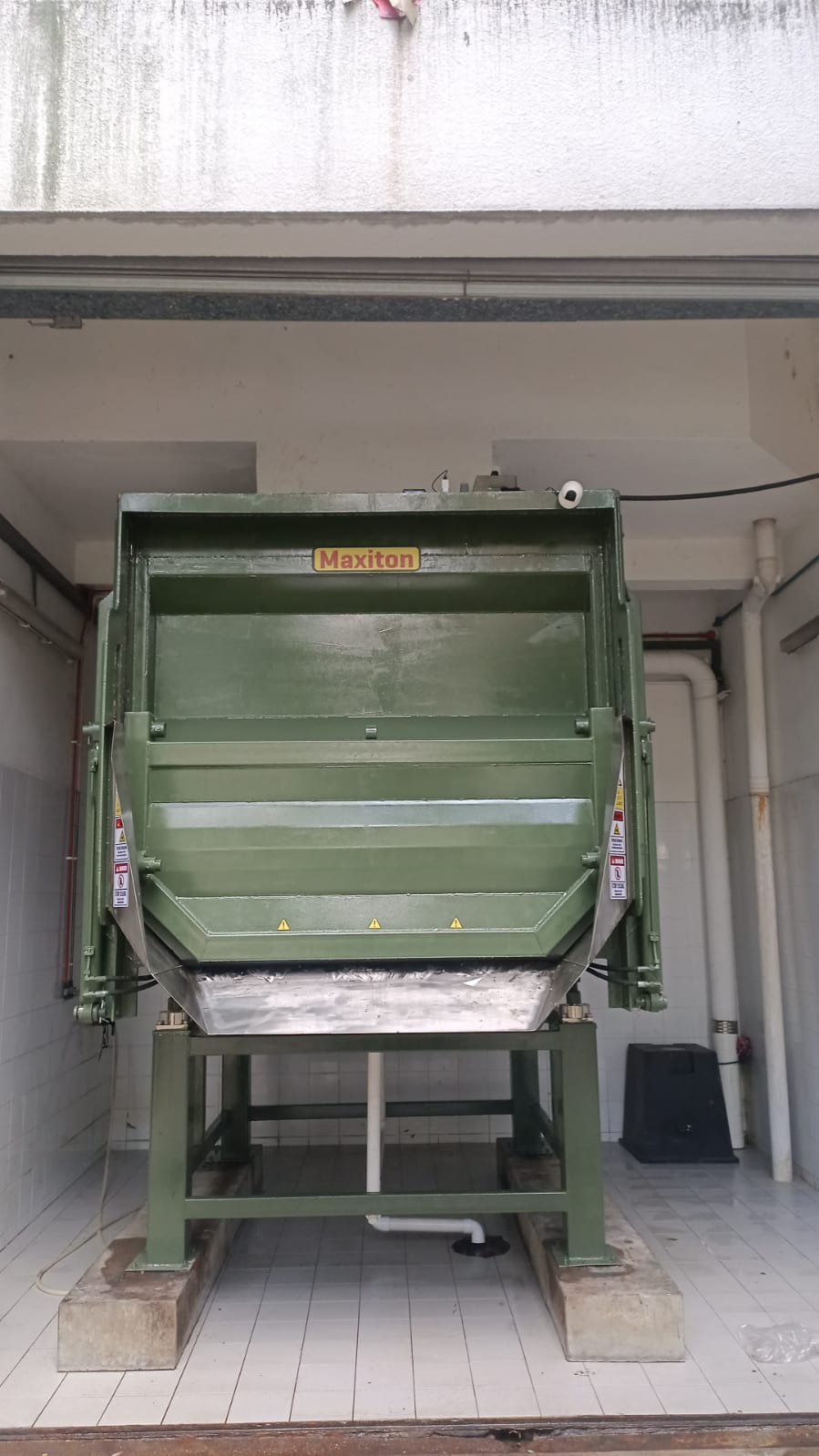
Waste compactors are essential infrastructure in Singapore’s commercial and residential buildings, but they are rarely discussed in the context of energy consumption. Facility managers meticulously track HVAC efficiency, lighting upgrades, and lift modernisation — yet the compactor running 24/7 in the basement often escapes energy audits entirely.
This oversight is increasingly costly. A conventional hydraulic waste compactor in a busy Singapore commercial building consumes between 5,000 and 15,000 kWh annually, depending on throughput and operating hours. At current commercial electricity rates of approximately $0.25 to $0.30 per kWh, that translates to $1,250 to $4,500 in annual energy costs per unit. For properties operating multiple compactors across different waste streams — general waste, recyclables, food waste — the aggregate energy bill becomes significant.
More importantly, as Singapore advances its Green Plan 2030 targets and the BCA Green Mark scheme tightens energy performance requirements, every kilowatt-hour counts. Waste management equipment that was acceptably efficient five years ago may now be a liability in green building certification assessments.
Where Traditional Compactors Waste Energy
Understanding why older compactors consume excessive energy requires examining how they operate. A conventional hydraulic ram compactor follows a fixed cycle regardless of how much waste is in the chamber:
- Full-stroke cycles: The hydraulic ram extends its complete stroke length every cycle, even when the chamber is only partially loaded. This means the system expends maximum energy whether compressing a full load or a quarter load
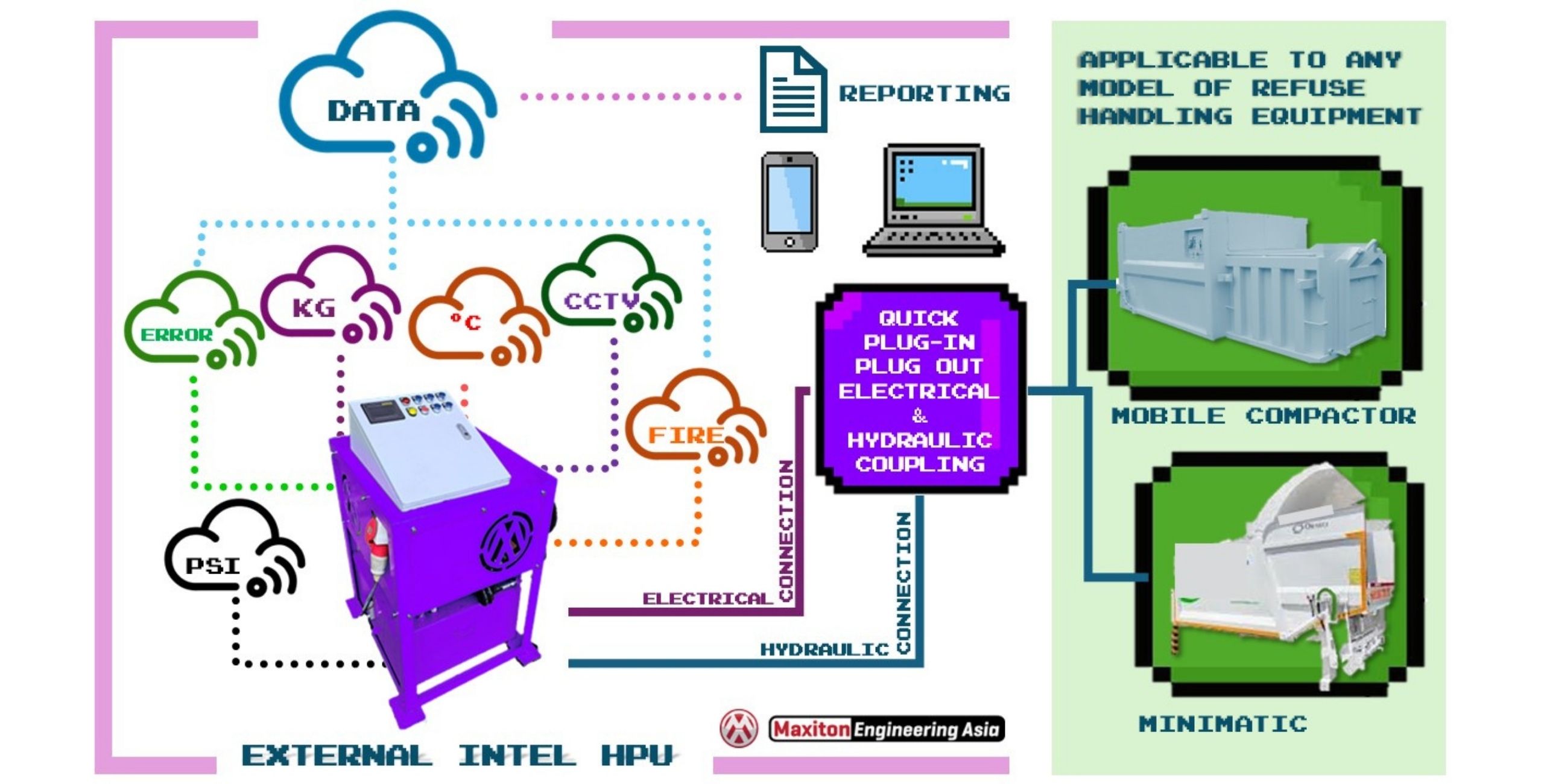
- Continuous motor operation: Many older compactors run their hydraulic power unit (HPU) motors continuously during operating hours, maintaining system pressure even when no compaction is occurring
- Oversized motors: Traditional compactors are often specified with motors sized for peak load conditions, meaning they operate well below optimal efficiency during normal throughput periods
- No idle management: Without smart controls, compactors cycle on fixed timers rather than responding to actual waste accumulation, running compaction cycles on near-empty chambers
The cumulative effect of these inefficiencies can increase energy consumption by 30 to 50 percent compared to what is actually needed to achieve the same compaction results.
How Smart Compactor Systems Reduce Energy Consumption
Modern waste compactors equipped with intelligent controls and IoT sensors address each of these inefficiency sources through targeted engineering solutions.
Variable-Frequency Drives and Adaptive Cycles
Smart compactors use variable-frequency drives (VFDs) on their hydraulic motors, adjusting motor speed and power draw to match actual load requirements. When the waste chamber is lightly loaded, the motor runs at reduced speed, consuming proportionally less energy. During heavy loading — after a busy lunch period in a food court or during peak hotel checkout hours — the drive ramps up to deliver full compaction force.
This adaptive approach typically reduces motor energy consumption by 20 to 35 percent compared to fixed-speed alternatives. The VFD also produces softer motor starts, reducing electrical demand spikes that can affect building power factor and incur demand charges from SP Group.
Sensor-Driven Compaction Timing
Rather than cycling on fixed timers, IoT-enabled compactors use fill-level sensors to trigger compaction only when sufficient waste has accumulated to justify a cycle. This demand-responsive approach eliminates wasted cycles on partially empty chambers.
In Singapore commercial buildings where waste generation follows predictable daily patterns — heavy during operating hours, minimal overnight — sensor-driven timing can reduce the total number of compaction cycles by 25 to 40 percent. Each eliminated cycle saves not just the direct energy of the compaction stroke, but also the associated motor start-up energy and hydraulic system pressurisation.
Intelligent Idle and Sleep Modes
Advanced compactor controllers implement multi-stage power management. When no waste has been deposited for a defined period, the system steps down through progressively lower power states:
- Active standby: HPU motor off, control system monitoring sensors, ready for immediate operation
- Sleep mode: Non-essential sensors powered down, system wakes on waste detection or scheduled check-in
- Deep sleep: Minimum power draw for overnight or holiday periods, full system restart on first waste deposit
These power management strategies are particularly effective in Singapore’s mixed-use developments where waste generation may cease entirely during certain hours. A compactor serving a food court that closes at 10 PM and reopens at 7 AM can save 8 to 10 hours of idle energy consumption daily.
Measuring and Verifying Energy Savings
One of the advantages of IoT-connected compactor systems is the ability to measure actual energy consumption in real time. Through Maxiton’s smart monitoring platform, facility managers can track:
- Daily and monthly energy consumption per compactor unit
- Energy per compaction cycle — identifying whether the system is operating efficiently
- Energy per tonne of waste processed — the key efficiency metric for benchmarking
- Peak demand events — when motor starts create demand spikes
This data supports Measurement and Verification (M&V) protocols required by many green building certification programmes. Properties pursuing BCA Green Mark Platinum or Super Low Energy certifications can use compactor energy data as part of their overall building energy performance documentation.
Benchmarking Against Industry Standards
With sufficient data from IoT monitoring, Singapore facility managers can benchmark their compactor energy performance against industry norms. A well-optimised smart compactor system should achieve an energy intensity of approximately 3 to 6 kWh per tonne of waste processed. Systems consistently exceeding 10 kWh per tonne likely have maintenance issues, incorrect sizing, or inefficient operating parameters that warrant investigation.
The Carbon Reduction Connection
Energy efficiency improvements in waste compactors contribute to carbon reduction through two pathways. The direct pathway is straightforward: less electricity consumed means fewer carbon emissions from power generation. At Singapore’s current grid emission factor of approximately 0.4 kg CO2 per kWh, a compactor system saving 5,000 kWh annually reduces carbon emissions by roughly 2 tonnes of CO2 per year.
The indirect pathway is equally significant. Higher compaction ratios achieved by properly functioning smart compactors reduce the frequency of waste collection truck trips. Each avoided truck journey eliminates diesel fuel consumption and its associated emissions. For a large commercial property, optimised compaction scheduling can reduce annual collection trips by 20 to 30 percent, with corresponding reductions in transport-related carbon emissions.
Together, these direct and indirect savings contribute meaningfully to a property’s Scope 2 and Scope 3 emissions reduction targets — increasingly important metrics as Singapore moves toward mandatory climate-related disclosures for large building portfolios.
Practical Steps for Singapore Facility Managers
Improving waste compactor energy efficiency does not always require full equipment replacement. A phased approach often delivers the best return on investment:
- Phase 1 — Audit and monitor: Install IoT monitoring on existing compactors to establish baseline energy consumption and identify the biggest efficiency gaps
- Phase 2 — Optimise operations: Adjust compaction schedules, implement timer-based idle management, and ensure maintenance is current to restore efficiency to existing equipment
- Phase 3 — Upgrade strategically: When compactors reach end-of-life (typically 10–15 years), replace with smart-enabled models featuring VFDs, sensor-driven cycles, and integrated IoT connectivity
Building a Sustainable Waste Management Infrastructure
Energy-efficient waste compactors are not a standalone solution — they are one component of a comprehensive approach to sustainable facility management in Singapore. When combined with proper waste segregation, recycling programmes, and food waste digestion systems, smart compactor technology helps properties build a waste management infrastructure that is both operationally excellent and environmentally responsible.
For Singapore facility managers navigating tightening sustainability requirements and rising energy costs, waste compactor energy efficiency is no longer an optional upgrade. It is a practical necessity that delivers measurable financial returns while supporting the broader environmental commitments that tenants, regulators, and the community increasingly expect.


Leave A Comment