

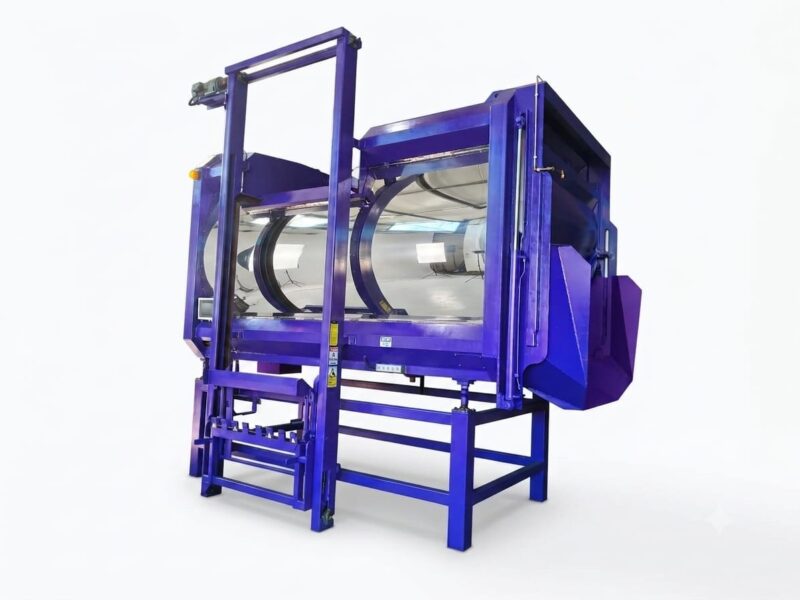
The Noise Problem: Why Refuse Chute Compactors Generate Complaints in Singapore High-Rises
If you manage a condominium or HDB estate in Singapore, you have almost certainly dealt with noise complaints related to your refuse chute compactor. The rhythmic thud of a hydraulic ram compressing waste at 2 AM, the metallic clang of bins shifting during compaction cycles, the vibrations that travel through concrete structures and into bedrooms several floors above — these are not minor inconveniences. They are persistent quality-of-life issues that generate resident complaints, strain management committee relationships, and in severe cases, lead to formal complaints with the Building and Construction Authority.
Traditional refuse chute compactors use a single hydraulic ram that strikes waste with considerable force. Each compaction cycle produces impact noise typically measuring 65 to 80 decibels at the source — comparable to a vacuum cleaner or a busy restaurant. But the real problem is not the absolute noise level; it is the impulsive nature of the sound. Sudden, repetitive impacts are far more disruptive to sleep and concentration than continuous background noise at the same decibel level.
How Hybrid Multiplexor Technology Changes the Equation
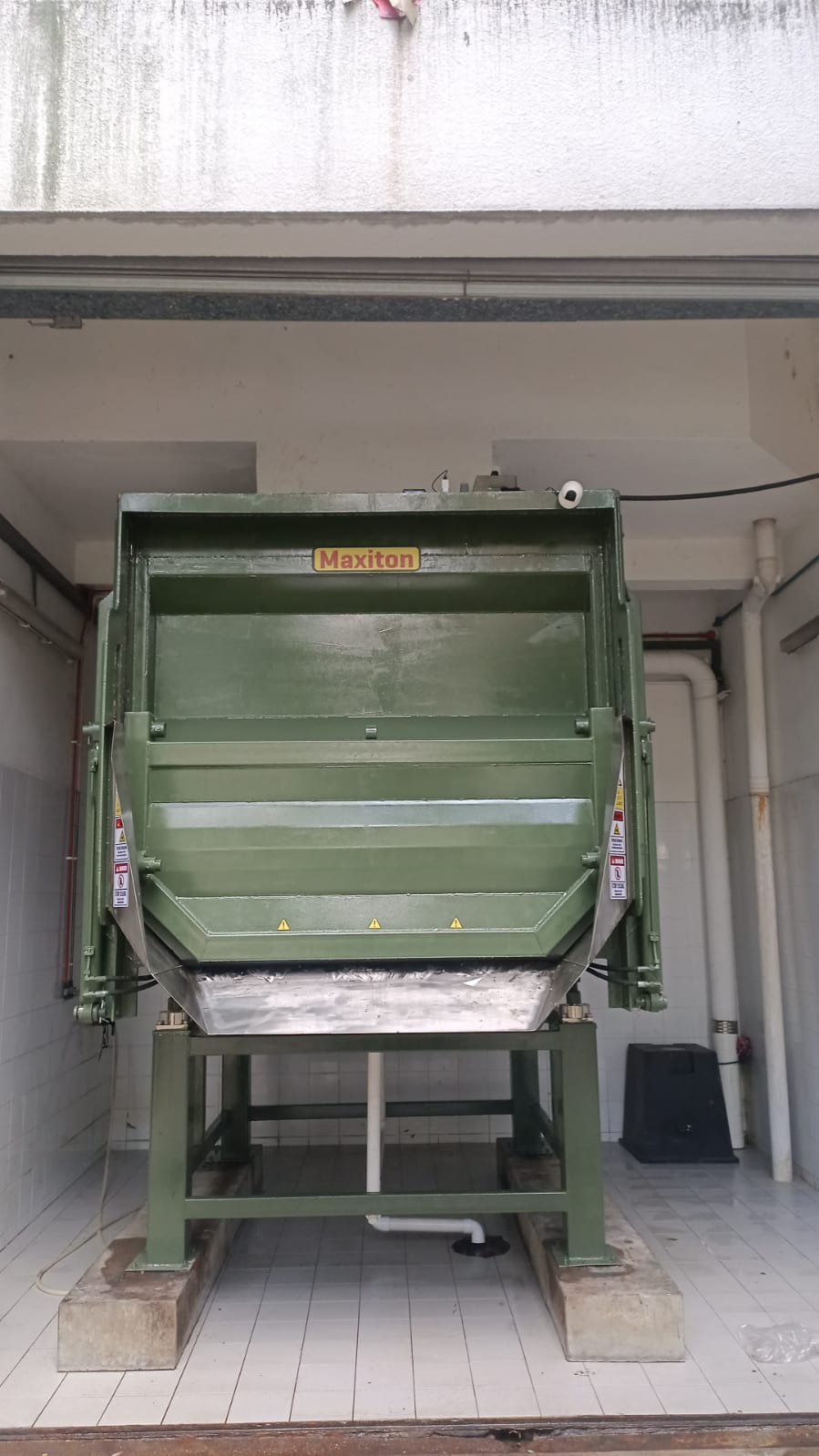
Hybrid multiplexor refuse chute compactors represent a fundamental rethinking of how waste is compressed within high-rise refuse chute systems. Rather than relying on a single high-force ram stroke, the multiplexor system distributes compaction across multiple lower-force stages, dramatically reducing the peak impact noise that causes complaints.
The technology works on a simple but effective principle: instead of one powerful hit, the system applies progressive pressure through a multi-stage compression sequence. Each stage applies moderate force, building compaction incrementally. The result is the same compaction ratio — typically 4:1 to 6:1 — achieved with significantly less acoustic disturbance.
Noise Reduction Performance
Independent acoustic measurements of hybrid multiplexor installations in Singapore residential buildings consistently demonstrate the following improvements:
- Peak noise reduction: 40–55% lower peak decibel readings compared to single-ram compactors at the same capacity
- Vibration transmission: 50–60% reduction in structural vibration measured at floors above and adjacent to the compactor room
- Night-time compliance: Most installations comfortably meet NEA’s recommended night-time noise limits for residential areas without requiring operational curfews
- Complaint reduction: Properties report 70–90% fewer noise-related complaints within the first three months after upgrading
Beyond Noise: Operational Benefits for Singapore Condominiums
While noise reduction is the primary driver for adopting hybrid multiplexor systems, the technology delivers several additional benefits that Singapore property managers find compelling.
Reduced Mechanical Wear and Longer Equipment Life
Single-ram compactors concentrate enormous force through a single hydraulic cylinder and pressing plate. Over thousands of compaction cycles, this concentrated stress accelerates wear on seals, cylinder rods, mounting brackets, and structural components. Maintenance intervals for traditional compactors in high-throughput Singapore residential buildings typically range from 8 to 12 weeks.
The multiplexor’s distributed force approach reduces peak stress on individual components. Each compression stage handles a fraction of the total force, resulting in less wear per cycle. Singapore installations report maintenance interval extensions of 30 to 50 percent, translating directly to lower annual maintenance costs and fewer service disruptions for residents.
Improved Compaction Consistency
A single powerful ram stroke can sometimes push waste to one side of the bin rather than compressing it evenly. This uneven compaction creates air pockets and reduces the effective compaction ratio, meaning bins fill up faster than they should. The multiplexor’s progressive compression produces more uniform compaction across the bin surface, maximising the usable volume and reducing collection frequency.
IoT Monitoring for Proactive Management
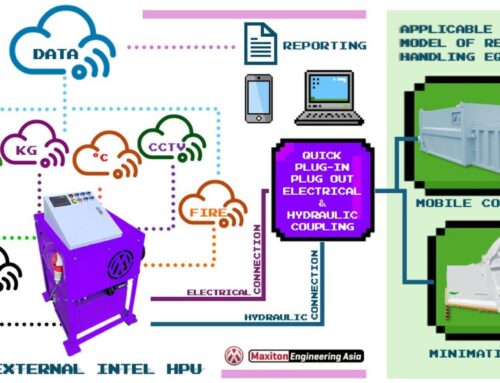
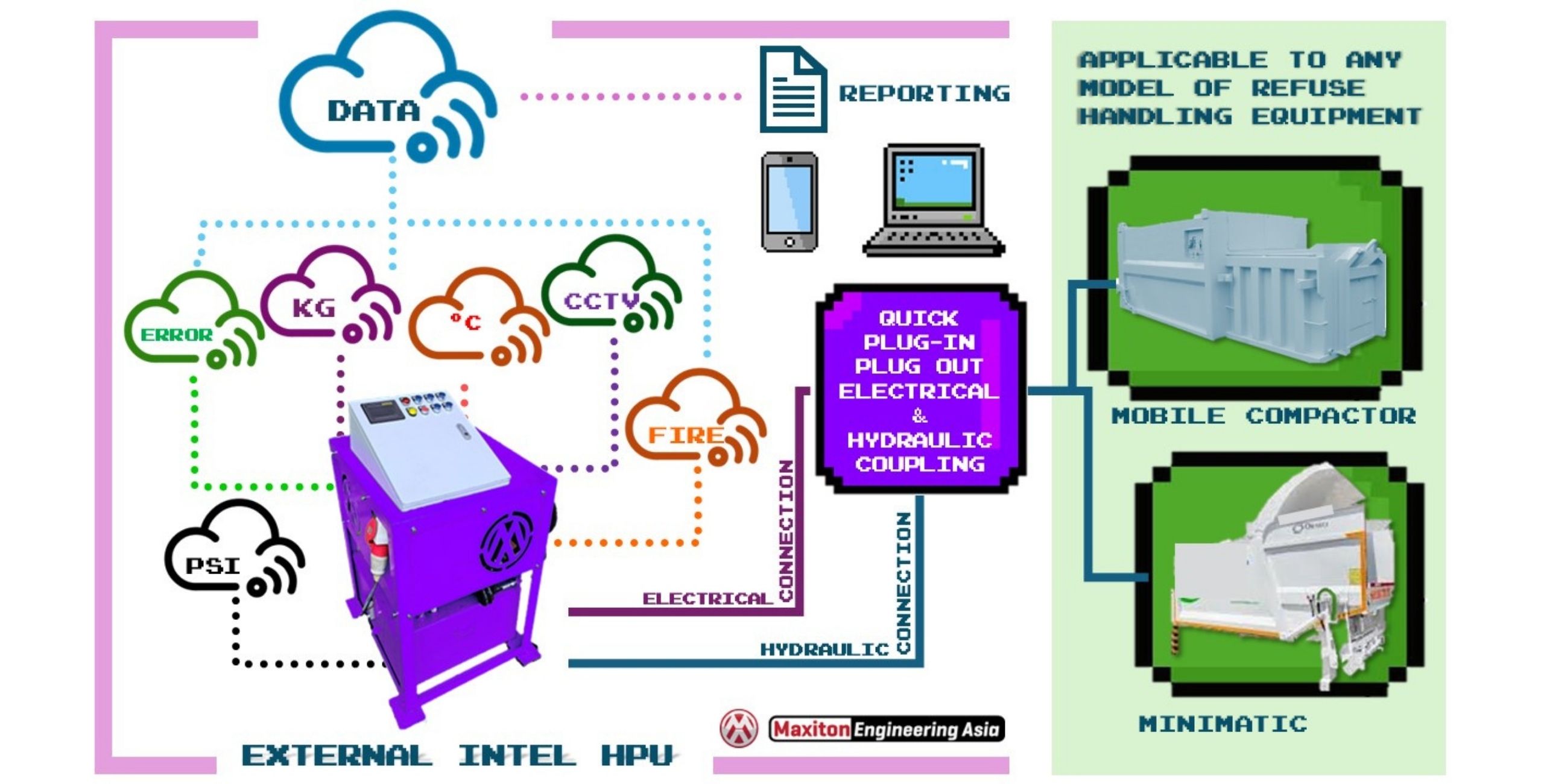
Modern hybrid multiplexor systems integrate with IoT monitoring platforms that give property managers real-time visibility into compactor operations. Key data points include:
- Fill levels: Percentage capacity of each bin, updated continuously
- Compaction cycles: Count and timing of cycles, useful for identifying usage patterns
- System health: Hydraulic pressure, motor temperature, and error codes transmitted in real time
- Noise events: Acoustic sensors can log peak noise levels for compliance documentation
For condominium management corporations (MCSTs) that need to demonstrate due diligence on noise management, the IoT platform provides an auditable record of compactor noise levels over time. This data can be invaluable when responding to formal noise complaints or when reporting to the management committee on improvement initiatives.
Predictive Maintenance and Downtime Prevention
Through Maxiton’s AI-powered diagnostics, the IoT system can identify developing issues before they cause equipment failure. Abnormal hydraulic pressure patterns, unusual motor current draws, or irregular cycle timing can indicate worn components that need replacement. Addressing these proactively prevents the worst-case scenario for any residential property: a compactor breakdown that leaves waste accumulating in chute rooms across multiple floors.
Retrofit vs New Installation: What Singapore Properties Need to Know
One of the most common questions from Singapore condominium managers is whether they can retrofit a hybrid multiplexor system into their existing refuse chute infrastructure or whether a complete replacement is necessary.
The answer depends on several factors:
- Existing chute diameter: Most Singapore residential buildings use 600mm or 900mm refuse chutes. Hybrid multiplexor compactors are available for both standard sizes
- Bin room dimensions: The multiplexor unit typically requires a similar footprint to single-ram compactors, making direct replacement feasible in most existing bin rooms
- Electrical supply: Power requirements are comparable to traditional compactors, though IoT connectivity requires a network connection that older bin rooms may not have
- Age of existing system: If the current compactor is more than 8–10 years old, full replacement usually offers better value than attempting to retrofit multiplexor technology onto aging infrastructure
Cost Considerations for Singapore MCSTs
Hybrid multiplexor compactors carry a higher upfront cost than basic single-ram alternatives — typically 15 to 25 percent more for equivalent capacity. However, the total cost of ownership calculation often favours the multiplexor system:
- Extended maintenance intervals reduce annual service contract costs
- Longer equipment lifespan delays the capital expense of replacement by 3–5 years
- Reduced collection frequency through better compaction consistency lowers waste hauler charges
- Noise complaint resolution eliminates the management committee time and legal risk associated with persistent resident grievances
For MCSTs evaluating the investment, the noise reduction benefit alone often justifies the premium. Persistent noise complaints can escalate to mediation through the Community Disputes Resolution Tribunals, consuming committee time and potentially affecting property values. Resolving the root cause through better technology is invariably more cost-effective than managing ongoing disputes.
Making the Right Choice for Your Property
Not every Singapore high-rise needs a hybrid multiplexor system. Properties with compactors located far from residential units, buildings with robust acoustic isolation in bin rooms, or developments with low waste throughput may find that a well-maintained traditional compactor serves adequately.
However, for the many Singapore condominiums and HDB estates where refuse chute compactor noise is an active concern, the hybrid multiplexor offers a proven engineering solution. Paired with IoT monitoring capabilities, it transforms the compactor from a source of complaints into a quietly efficient system that residents barely notice — which, for waste management infrastructure, is exactly the right outcome.

Leave A Comment