Singapore’s Recycling Challenge: Good Intentions, Poor Data
Singapore’s domestic recycling rate has hovered around 12% in recent years — a sobering figure for a nation that generates over 7 million tonnes of solid waste annually. The problem isn’t a lack of blue bins or recycling chutes. It’s a lack of measurement, accountability, and feedback.
Most properties have no idea how much they actually recycle. There’s no weighing, no tracking, and no way to identify whether recycling initiatives are working or failing. Residents get no feedback on their efforts. Management committees report vague estimates at best.
Smart recycling weighing platforms change this dynamic entirely — turning recycling from an unmeasured hope into a data-driven, improvable operation.
What Is a Smart Recycling Weighing Platform?
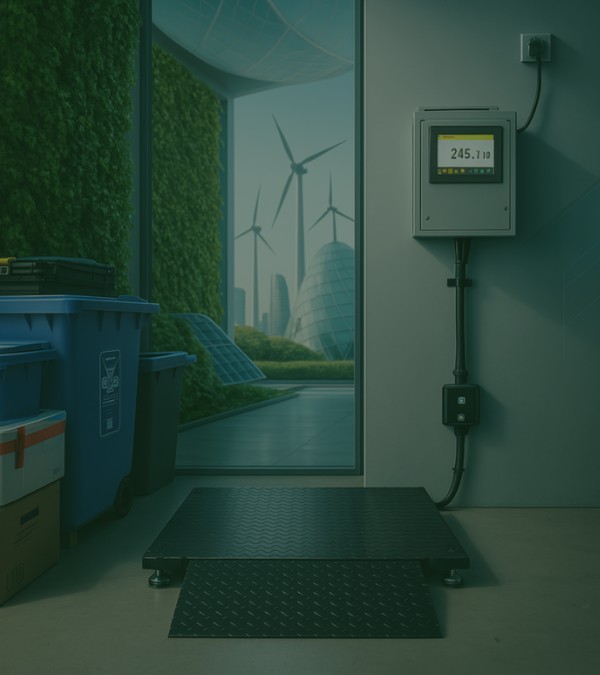
A smart recycling weighing platform is an industrial-grade weighing system installed at the recycling collection point of a building or estate. Every bag, bin, or container of recyclables is weighed as it enters the recycling stream.
Key features include:
- Precision load cells — accurate weighing from 0.5kg to several hundred kilograms
- Automated logging — every weigh-in is timestamped and recorded to the cloud
- Material categorisation — record what type of recyclable (paper, plastic, metal, glass) for each entry
- IoT connectivity — data transmitted via 4G/Wi-Fi to a central monitoring dashboard
- Integration with waste data — combine with compactor weight data to calculate overall recycling percentages
The platform can be standalone or integrated into a broader IoT waste management ecosystem that includes smart compactors, fill-level sensors, and automated alerts.
Why Weighing Recyclables Matters
You Can’t Improve What You Don’t Measure
Without weighing, recycling programmes operate on faith. A building might have dedicated recycling bins, regular collector visits, and educational posters — but has zero data on whether any of it produces results.
With a weighing platform, properties instantly gain:
- Baseline data — how much are we actually recycling today?
- Trend tracking — are our initiatives improving rates over time?
- Intervention triggers — if rates drop, investigate and respond quickly
- Reporting confidence — provide auditors, Green Mark assessors, or management committees with verified numbers
NEA Reporting Compliance
Singapore’s National Environment Agency requires large commercial and industrial premises to report waste and recycling data. Properties generating more than specified thresholds must submit waste data plans. A smart weighing platform automates this compliance entirely — generating the reports NEA needs without manual estimation or paperwork.
Resident and Tenant Engagement
One of the most powerful applications of recycling data is feedback. When residents can see their building’s recycling rate improving month over month, it creates positive reinforcement. Some properties display monthly recycling dashboards in lobbies or resident apps, turning waste data into community engagement.
For commercial properties, recycling data feeds directly into tenants’ ESG (Environmental, Social, and Governance) reporting — increasingly required by corporate sustainability frameworks.
How Smart Weighing Platforms Work in Practice
Residential Condominiums
In a typical condominium deployment:
- The weighing platform is installed at the recycling collection point (usually near the bin centre)
- Cleaning staff or recycling collectors place recyclable bags/bins on the platform
- The system automatically records weight, timestamp, and material type
- Data syncs to the cloud dashboard accessible by property management
- Monthly reports show total recyclables collected, broken down by type and trend
When paired with a smart compactor measuring total general waste, the building’s exact recycling rate calculates automatically: recyclables weighed ÷ (recyclables + general waste) × 100.
Commercial and Industrial Properties
For larger properties with multiple waste streams:
- Multiple weighing points can track different material streams separately
- Integration with waste transfer stations allows tracking at scale
- Tenant-level allocation is possible when recycling points are assigned to specific floors or zones
- Automated reports feed directly into corporate sustainability dashboards
Calculating Your Building’s True Recycling Rate
The formula is straightforward once you have data from both systems:
Recycling Rate = (Total Recyclables Weighed ÷ Total Waste Generated) × 100
Where:
- Total Recyclables Weighed = sum of all recyclable materials recorded by the weighing platform
- Total Waste Generated = recyclables + general waste (measured by smart compactor load cells)
With both data streams automated, this calculation updates in real-time on your dashboard. No manual counting, no estimation, no guesswork.
ROI: When Does a Weighing Platform Pay for Itself?
Smart recycling platforms deliver ROI through multiple channels:
- Reduced waste disposal costs — every kilogram diverted to recycling is a kilogram you don’t pay to dispose of as general waste
- Recycling revenue — with weight data proving volumes, properties can negotiate better rates with recycling collectors
- Green Mark certification — verifiable recycling data strengthens Green Mark submissions (certified buildings command higher rents)
- NEA compliance — avoid penalties or negative attention from regulators by maintaining accurate reporting
- Waste contractor negotiations — armed with actual data, properties can hold waste collectors accountable and optimise contracts
For a typical 500-unit condominium, the combination of disposal cost savings and improved recycling revenue typically delivers payback within 12-18 months.
Integration with Broader Smart Waste Systems
A recycling weighing platform is most powerful when integrated with a complete smart waste management ecosystem:
- Smart compactors — measure general waste volumes for total waste picture
- IoT monitoring dashboard — unified view of all waste and recycling data
- Food digesters — divert food waste from general stream (further improving recycling percentages)
- Smart bin lifters — automate the movement of recyclable bins to collection points
Together, these systems give property managers complete visibility into every waste stream — enabling data-driven decisions that reduce costs, improve environmental outcomes, and satisfy regulatory requirements.
Getting Started: What Properties Need to Know
Implementing a smart recycling weighing platform requires minimal infrastructure:
- Space — a flat, covered area near the recycling collection point (typically 2m × 2m)
- Power — standard 240V power supply
- Connectivity — 4G coverage or Wi-Fi access (most Singapore buildings have both)
- Training — brief orientation for cleaning staff on weighing procedures
Installation is typically completed within a day, with data flowing to the dashboard immediately. Training for operations staff is included with every deployment.
The Future: From Measurement to Behaviour Change
The real power of recycling data isn’t just measurement — it’s the ability to influence behaviour. Properties with visible recycling metrics consistently show improvement over time because:
- Management committees can set and track targets
- Residents see their collective impact and feel motivated
- Cleaners and waste collectors are accountable to data
- Successful initiatives are identified and scaled
- Failing approaches are caught early and adjusted
Singapore’s path to higher recycling rates isn’t about more blue bins — it’s about smarter systems that make recycling measurable, visible, and improvable.
Maxiton Engineering Asia’s Smart Recycling Weighing Platform is designed for Singapore’s residential and commercial properties. Integrated with our IoT monitoring ecosystem, it provides the data foundation for measurable recycling improvement. Contact us for a site assessment or learn more about our complete waste management equipment range.