The Convergence of Waste Management and Smart Building Technology
Singapore’s push toward smart buildings has transformed how facility managers approach every aspect of building operations — from HVAC and lighting to security and access control. Yet waste management, one of the most operationally intensive building functions, often remains disconnected from the central Building Management System (BMS).
Modern IoT-enabled smart compactors are changing this. By integrating waste equipment data directly into your BMS, facility managers gain unified visibility across all building systems, enabling smarter decisions and more efficient operations.
What BMS Integration Means for Waste Equipment
Building Management Systems like Honeywell, Siemens Desigo, Johnson Controls, and Schneider EcoStruxure serve as the central nervous system for smart buildings. Integrating waste compactors into these platforms means:
- Unified dashboard: View compactor fill levels, operational status, and alerts alongside HVAC, lighting, and fire systems
- Automated workflows: Trigger actions based on compactor events (e.g., notify collection contractor when full)
- Centralised alarm management: Compactor faults appear in the same alarm queue as other building systems
- Historical data correlation: Analyse waste patterns alongside building occupancy and energy data
Integration Protocols and Communication Standards
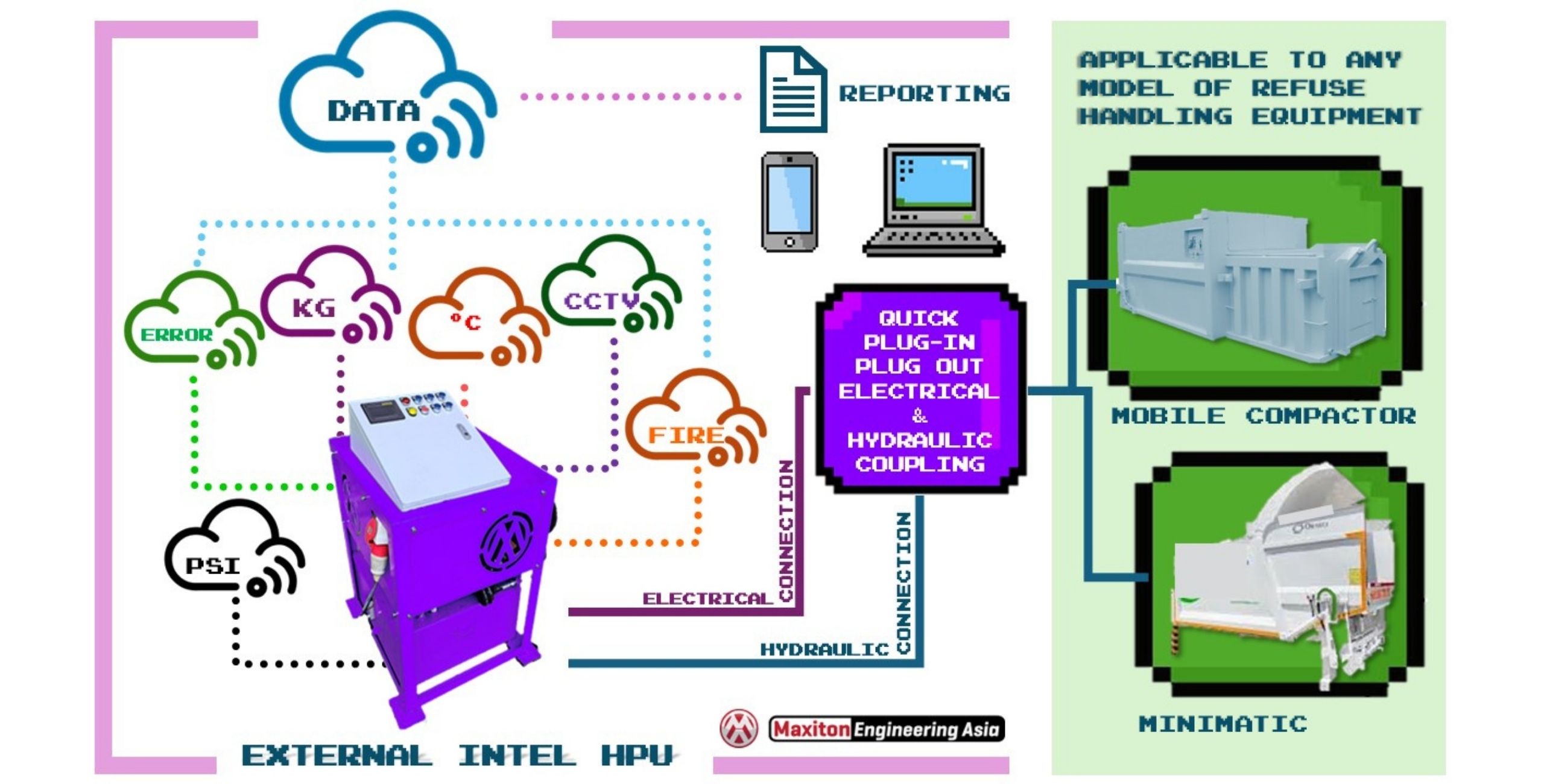
Maxiton’s Smart Control Panel supports multiple communication protocols for seamless BMS integration:
MQTT (Message Queuing Telemetry Transport)
MQTT is the preferred protocol for IoT device communication in smart buildings. It provides lightweight, real-time data streaming with minimal bandwidth requirements. Compactor telemetry — fill levels, cycle counts, hydraulic pressure, motor temperature — publishes to MQTT topics that BMS platforms can subscribe to instantly.
BACnet (Building Automation and Control Networks)
For buildings using BACnet-based BMS platforms (common in Singapore’s Grade A commercial buildings), waste equipment data can be exposed as BACnet objects. This allows the BMS to treat compactors like any other building device, with native alarming and trending capabilities.
Modbus TCP/RTU
Legacy BMS installations that rely on Modbus can connect to smart compactors via Modbus TCP gateways. This is particularly useful for older buildings upgrading their waste infrastructure without replacing the entire BMS platform.
REST API
Cloud-based BMS platforms and custom property management dashboards can pull compactor data via RESTful APIs, enabling integration with web-based monitoring tools and mobile applications.
Key Data Points Available for BMS Integration
A fully integrated smart dual compactor exposes the following data to the BMS:
Operational Data
- Real-time fill level (percentage)
- Compaction cycle count (daily/weekly/monthly)
- Current operating state (idle, compacting, full, error)
- Door status (open/closed)
- Bin presence detection
Equipment Health Data
- Hydraulic oil temperature and pressure
- Motor current draw and runtime hours
- Intel HPU performance metrics
- Maintenance countdown timers
- Component lifecycle indicators
Environmental Data
- Ambient temperature at bin centre
- Odour sensor readings (where installed)
- Pest detection alerts
Practical Use Cases for Singapore Buildings
Automated Collection Scheduling
When the BMS detects a compactor reaching 85% capacity, it automatically triggers a collection request to the waste contractor’s scheduling system. No manual phone calls, no unnecessary trips for half-empty bins, no overflow incidents.
Energy Optimisation
The BMS can correlate waste generation patterns with building occupancy data. During low-occupancy periods (weekends, public holidays), the system can adjust compactor standby power settings and ventilation schedules for the bin centre, reducing energy consumption.
Lift Coordination
In high-rise buildings where waste collection requires service lift access, the BMS can pre-book lift slots when compactors signal they are ready for collection. This prevents service lift conflicts and streamlines the collection process.
Fire Safety Integration
Compactors integrated with the fire alarm system can automatically shut down during fire events, close fire-rated bin centre doors, and activate suppression systems if smoke or heat is detected near waste equipment.
Tenant Billing and Reporting
For multi-tenant buildings, BMS-integrated recycling weighing platforms enable accurate waste tracking per tenant. This data feeds into property management systems for fair cost allocation and sustainability reporting.
Implementation Considerations for Singapore Properties
Network Infrastructure
BMS integration requires reliable network connectivity at the bin centre. Options include:
- Wired Ethernet: Most reliable, recommended for new builds
- Industrial Wi-Fi: Suitable for retrofits where cabling is impractical
- 4G/5G cellular: Backup connectivity or for remote bin centres
Cybersecurity
Connecting waste equipment to building networks requires proper network segmentation. Best practices include:
- Dedicated VLAN for waste management IoT devices
- Encrypted communication (TLS for MQTT and API connections)
- Role-based access control for compactor management interfaces
- Regular firmware updates through managed deployment
Commissioning and Testing
Proper BMS integration requires coordination between the waste equipment installer, BMS integrator, and facility management team. A phased approach works best:
- Install and commission compactor equipment standalone
- Establish network connectivity and verify data publishing
- Configure BMS points and alarm thresholds
- Test automated workflows end-to-end
- Train facility management staff on integrated operations
Future-Proofing Your Waste Infrastructure
As Singapore progresses toward its Smart Nation vision, buildings that integrate all operational technology — including waste management — into unified platforms will be better positioned for:
- Compliance with evolving NEA digital reporting requirements
- BCA Green Mark certification (which increasingly values integrated smart systems)
- Attracting tenants who prioritise sustainability and operational transparency
- Reducing total cost of ownership through predictive rather than reactive maintenance
Whether you are designing a new development or upgrading existing waste infrastructure, planning for BMS integration from the start ensures your waste management systems deliver maximum value. Contact Maxiton Engineering to discuss integration options for your property.